When I was a kid, I had synesthesia. I found a strong correlation between certain colors and certain musical keys. Keys like B flat and F were purple, A was always red, and so on. As I’ve gotten older, this immediate association between tonality and color has disappeared. It’s a part of my childhood that I remember, but can’t access.
My synesthesia curated an interest in music at a young age. I picked up violin and played in my school orchestra for years. I found that later in my childhood and teenage years, classical music, and specifically baroque music, was still able to activate some of those synesthetic associations.
Playing and listening to classical music helped me understand instrumental music as a sort of mathematical exercise in emotion evocation. There were no words needed to engage and move the listener.
Nowadays, I find listening to instrumental music to be refreshing, like eating ginger right after sushi. It freshens up those listening taste buds, allowing you to appreciate music in a way not possible with words.
Therefore, I’d like to go over some instrumental albums of various genres that are approachable for any music lover. However, expect things to get a little geeky.
Boards of Canada – Music Has The Right To Children

Boards of Canada makes music for those who wish to travel to other dimensions. Their use of grainy-but-groovy drum beats overlapped with sample-ridden, dark, psychedelic synths creates a nostalgic, if not slightly spooky listening experience on this album. Throughout the album, the only words spoken are various vocal samples of children from educational videos made by the National Film Board of Canada (where the group got their name), most notably on tracks like “The Color of The Fire” and “Aquarius.”
The album also contains perhaps their most famous track, “Roygbiv,” an exercise in pure ear-candy. The guttural bass synths harmonize with higher register synths, piano and vocal samples, all adding up to a layered cake of harmony that creates a frosty, echoey, and wintery atmosphere.
What I love about the album is the intentionality of every little detail. The production of every layer of these songs is deliberate, meaning the group put a lot of thought into the album to make it sound like nothing else out there.
My favorite track is “Happy Cycling,” but it can change depending on the day, which is another mark of a truly great album.
If you enjoy music that will freak you out a little, give this one a spin.
Windows96 – One Hundred Mornings

If you want an album experience that sounds like its cover, this one is your best bet. And the cover might be the best way to describe the album, because otherwise it’s difficult to describe what it’s like. It occupies a space adjacent to vaporwave, but with its own unique take on the genre. Windows 96, or Gabrial Eduardo, captures the essence of 20th century synth sounds in a 21st century way.
There aren’t any samples or vocals, and there are very minimalist drum patterns. What fills the space instead are soft keys, strummed like a guitar at times (like on the song “Abstract”). On many of the songs, there are synths emulating pan flutes, soaked with reverb, floating above the sometimes dissonant chords. It’s a very zen album.
My favorite song on this album is “Bliss.” The song evokes a triumphant mood in a melancholic way. It feels like being proud of where you are now while still wishing you were somewhere else.
Hayden Pedigo – Live in Amarillo, Texas

Hayden Pedigo is the embodiment of the fact that sometimes, music doesn’t need words. Live in Amarillo, Texas is a love letter to the natural world surrounding Amarillo. Using just a guitar, he’s able to paint a picture of what the South Plains of Texas are like.
Pedigo explains what I mean best, talking to NPR about his latest album, I’ll Be Waving as You Drive Away: “I think you can hear Amarillo in this new record with the pauses, the silence. That’s always my tribute to the landscape, is taking long breaks. It’s the flat, endless, like, plains of Amarillo.”
I’m biased towards Hayden Pedigo and his music. I grew up just down the road from Pedigo’s hometown of Amarillo, in Lubbock. I understand what it’s like to stand in a field and see for miles an endless expanse of red dirt, brush, cactus and blue sky, that odd place where desert and plains meet. Pedigo’s music encapsulates the natural beauty of a place that is notorious for not being particularly exciting.
In between some of the songs, Pedigo takes a moment to talk about the next song and what it means to him. These quick monologues give insight into Pedigo’s creative mindset that isn’t otherwise available on his studio albums. Additionally, the live performance makes the pieces feel more intimate and living.
My favorite track is “The Happiest Times I Ever Ignored.”
Masayoshi Takanaka – An Insatiable High

Oh yeah. Now we’re getting geeky. Masayoshi Takanaka’s An Insatiable High is the musical equivalent of where you find the pot of gold at the end of the rainbow. It’s so rich and upbeat, it’s hard to not love it.
I have to admit this addition is cheating. One song, “E.S.P.,” has lyrics in it. But the rest of the album is indeed instrumental, and it’s so good that I felt I had to include it.
This album is nothing but cinematic, feel-good music. It’s filled with fluttering orchestral swells, warm synths, groovy bass playing, and masterful guitar playing by Takanaka overlayed it all. Many of the songs have this distinct, nostalgic feeling to them; like you’re remembering some sunny day where everything went right for you.
In some moments, Takanaka leans into Latin-feeling beats and guitar melodies. The album has a distinctly tropical feel throughout.
If you’re missing the beach and the sun’s rays during the cold months, this one is sure to cheer you up. My favorite track is “Malibu.”
Hailu Mergia and Dahlak Band – Wede Harer Guzo
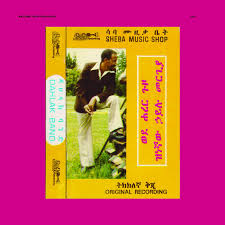
Wede Harer Guzo is amazing; not just for its harmonious mix of traditional Ethiopian music, jazz, blues, and funk, but also for its story.
During the late 70s, the Derg dictatorship in Ethiopia was cracking down on nightlife and free expression. They began targeting bands who included lyrics and words in their music, for fear of any negative words being sung against the authoritarian regime. So what did keyboardist Hailu Mergia and his band do? They left lyrics behind and went instrumental.
After recording music in his home country for many years, Mergia came to the United States and worked as a taxi driver. In the 2010s, much of his other music was being released on the internet under the Awesome Tapes from Africa label. Mergia remembered this record’s existence, and dug through his own archive until he found the only original cassette of the album.
The album does include vocals on certain tracks, but they’re almost more like chants being sung than words. The Dahlak Band is incredibly tight, with a swinging drummer on every song, wonderful guitar voicings, and funky bass lines all accompanying Mergia’s brilliant and soulful electric organ sounds. It’s incredibly lush and warm, and with the added sonic grain effect ever-present from Mergia’s cassette recording, the contents of the album have an added nostalgic layer. My favorite track is “Anchin Kfu Ayinkash.”
This album is a great first foray into the diverse and beautiful world of African music, and is also sure to cheer anyone up.
Hilary Hahn – Hilary Hahn Plays Bach

It felt right to include this one. These recordings of Bach scratch my occasional classical music itch. Everything from the room’s reverb, to the sound of Hahn’s violin, to the way Bach composed these solos to emulate the sound of a full orchestra. Hilary Hahn manages to walk the tightrope of delicacy and ferocity, leaning into one or the other in exactly the right moments.
For those who think classical music is boring, I ask you to give this one a try.
Snarky Puppy – We Like It Here

Possibly the geekiest it can get, We Like It Here is the perfect mix of jazz, fusion, and rock in one instrumental package. On no other album can you find a collection of the absolute peak of Snarky Puppy’s musicianship. And what a collection of musicians Snarky Puppy is, at times being over 25 musicians strong in the supergroup.
The musicians come from all over the world, according to Snarky Puppy themselves, which contributes to the global sound you can find in their music. We Like It Here doesn’t suffer from the same pretense that a lot of modern jazz albums do, at least to me. The album is so ridiculous and chaotic, that it feels like the musicians behind it aren’t taking themselves too seriously.
It’s punchy, and with something unexpected always around the corner. With every listen, I still find that there’s almost no way to know what’s next. It’s an album to enjoy in the present, with each absurd moment fleeting before the next.
The best part about it is, the album feels accessible. It’s not an album made just for musicians, or just for music geeks. While it gets hectic at times, you’re always able to follow some theme or musical motif.
My favorite track is “Lingus.” Its drums are fantastic, its horn section creates a catchy melody, and its breakdown halfway through the song feels like a Miles Davis-inspired acid trip.
If you like Mario Kart music, this one’s for you.
Mac DeMarco – Some Other Ones

To round off the list is Mac DeMarco’s Some Other Ones, an instrumental compilation of songs that didn’t make the cut from the Another One era of his indie rock princedom.
The album truly is nothing extraordinary. It’s only 22 minutes long, and doesn’t feature the catchy lyrics and melodies present in his other albums of the era. They’re not exactly demos, but they’re not fully fledged songs either, somewhere in between.
DeMarco obviously doesn’t take the album too seriously; just look at the cover. But that’s kind of the point. The songs are silly, short and fun. This little album, to me, is like a meditation. Everything is what it is, and that’s why I love it so much.
My favorite track is “Young Coconut.” It’s that perfect upbeat song that feels like seeing that first glimpse of warm weather and budding trees.